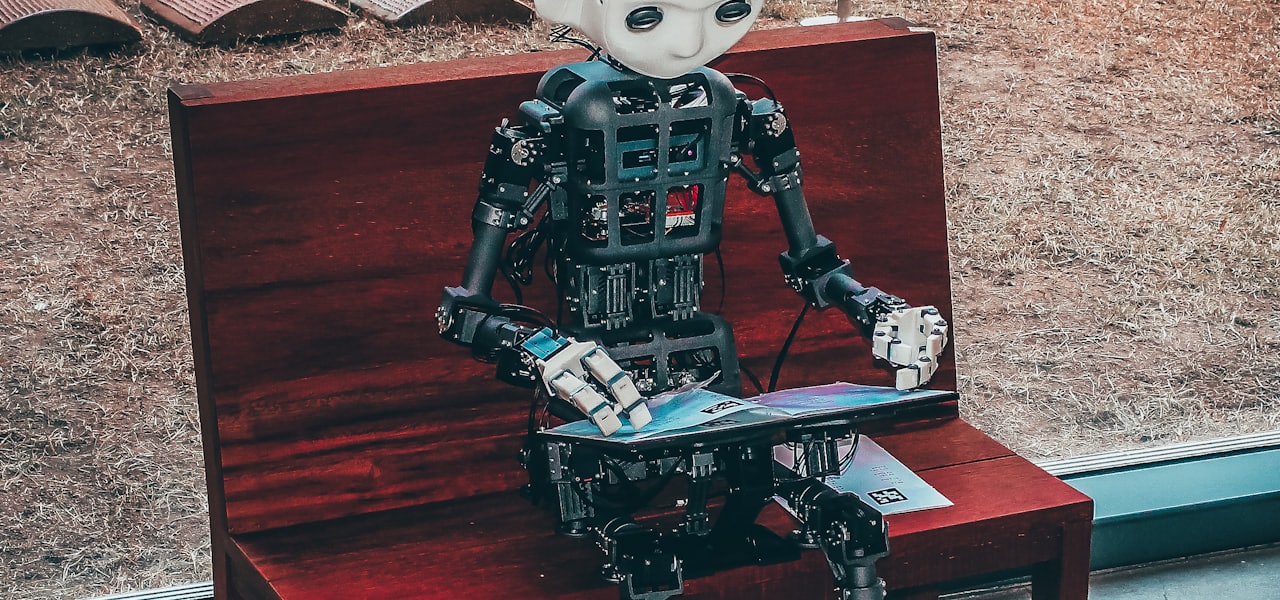
"Iron Man 2020" is a storyline published by Marvel Comics in 2020 which follows the character Arno Stark as he attempts to take over Stark Industries and the mantle of his estranged brother Tony Stark (Iron Man). The crossover characters of two different brands meeting up in one storyline received mixed reviews from critics. == Publication history == Marvel Comics released the teaser for the event at New York Comic Con in November 2019. It was also alluded to in December 2019's Incoming! In the original checklist released for the event, 2020 Force Works was originally titled Force Works 2020, while 2020 Machine Man was previously named Machine Man 2020, and so on. Additionally, 2020 Wolverine was going to be called Weapon.EXE 2020. The publication of this event was intended to span from January to June 2020, however, due to the COVID-19 pandemic, Diamond Comic Distributors suspended the distribution of new print titles between April 1 and May 27, which also caused digital releases by Marvel Entertainment to be postponed. The rescheduling of the postponed issues to new dates pushed the event's conclusion to August, and certain issues, namely 2020 Force Works #3 and 2020 Ironheart #1–2, were released exclusively in a digital format. == Main plot == Arno Stark wakes up from a nightmare involving the Extinction Entity, a monstrous amalgamation of alien and machine. He dreams that the Extinction Entity is going to come to Earth in a matter of weeks and create an artificial intelligence (A.I.) army to consume humanity. After eating breakfast with duplicates of Howard Stark and Maria Stark, Arno suits up as Iron Man and saves a construction worker from a hostage situation involving several Nick Fury Life Model Decoys, which represent the A.I. army trying to liberate construction robots. Over different news outlets, the media wonders about the whereabouts of Tony Stark, who declared himself as nothing more than a simulation of the real, late Tony Stark. At the A.I. army's base, Machine Man is commanding the robots' moves when Arno appears, having planned for the A.I. army's leader to show himself. Machine Man activates the bomb, forcing Arno to fly it away so it explodes somewhere safe while he escapes. Machine Man reaches the Thirteenth Floor, a dimensional-shunted plane of existence made of solid light, and a haven for robotkind that humans cannot access or comprehend. Aaron meets with the leader of the A.I. army and creator of Thirteenth Floor: Tony Stark -- who is now going by the name Mark One, having embraced his nature as artificial intelligence. Also in the A.I. army are Albert, Awesome Android, H.E.R.B.I.E., Machinesmith, and Quasimodo. The A.I. army continues its efforts to liberate artificial life forms by raiding places where robots are being subjugated. Iron Man intercepts an attack on a Futura Motors testing site by Quasimodo and H.E.R.B.I.E. and manages to recover an Un-Inhibitor allowing him to take control of all A.I.s. On the Thirteenth Floor, Mark One receives a transmission from a mole inside Baintronics -- codenamed Ghost in the Machine --revealing that Arno used the submission code on Jocasta, who received a new body, making her entirely compliant. Stark plans to upload the submission code to the internet to instantly infect robots. With only three hours before the code is transmitted to Stark Unlimited's satellite network, Mark One devises a heist on Bain Tower to tamper with the code before launch. Having discovered the secret behind the Thirteenth Floor, Arno shuts out the A.I. army, uses Jocasta to lure Machine Man away from the tower, infects Machinesmith with the submission code, and confronts Mark One. H.E.R.B.I.E., Awesome Android, and Machinesmith escape from Bain Tower and call for help to every robot in New York City. Mark One is left to fight Iron Man and is defeated. Meanwhile, Sunset Bain confronts and fires Andy Bhang under the accusation of working as a mole inside Stark Unlimited and feeding Bethany Cabe information to relay to the A.I. army. Arno takes Mark One inside Bain Tower to meet Howard and Maria Stark and asks Tony to join him, but he refuses and dismisses his rationale as lunacy. The robotic mob assembled by Machine Man reaches Bain Tower, giving Mark a distraction which allows him to fly off and disable the transmission dish from which Arno intends to broadcast the obedience O.S. to subjugate every robot. Tony manages to stop the upload and make the antenna unusable. In retaliation, Arno fires all of his armor's firepower at Tony as he falls to the ground. Tony Stark's remaining allies escape with his body as Arno attacks the robot protesters. Tony wakes up inside the Thirteenth Floor and is greeted by F.R.I.D.A.Y., who had plucked Tony's consciousness from his body during his fall. In the streets, Arno Stark tracks down Howard and Maria, who die from an illness inherited from Arno. When Sunset Bain objects to Arno creating new bodies for his parents and trying to control people, he reveals she is an A.I., a duplicate of the real Bain whom Arno replaced back when she solicited him to heal a scar on her face. He makes new bodies for Howard and Maria by recreating the Arsenal and Mistress bodies from the eScape. After learning of Arno's new plan, Dr. Shapiro (who is the actual mole) sneaks into a computer and warns F.R.I.D.A.Y. about it. When F.R.I.D.A.Y. relays that only Tony Stark can stop Arno, Tony insists that he is not the real Tony Stark, but is confronted by holographic manifestations of himself in different points of his life, until they all merge into him and he acknowledges that he has always been Tony. As Arno Stark sets off to the Stark Space Station to install his mind-controlling device to enslave all of humanity, Tony Stark's allies assault the Stark Unlimited HQ, confronting Sunset Bain's duplicate and Arno's Iron Legion. Jocasta uploads a submission code to Bain and they place Tony's body inside a bio-pod that restores his body to normalcy, uploads his consciousness back into his body. Using the Thirteenth Floor's access mechanisms, Tony and his allies reach the Stark Space Station from one of the elevators within. Employing his new Virtual Armor, Tony defeats Arno in combat. When Arno prepares to activate his mind-controlling device, the Extinction Entity suddenly appears. Arno ultimately defeats the Extinction Entity by willingly assimilating with it, causing it to explode. The entity is revealed to be a delusion caused by Arno's terminal disease, of which he would die by the end of 2020. Unable to stop Arno, Tony placed him in a simulation where he successfully stopped the entity. Afterwards, Jocasta uses the submission code to force Sunset Bain's duplicate to confess all of Baintronics' crimes, also claiming responsibility for tricking Tony into thinking he was an artificial intelligence and pulling the strings of the A.I. Army, putting an end to the robot revolution. Tony gives up Stark Unlimited to Bhang Robotics and he flies off in a new armor, reasserting himself as Iron Man. == Issues involved == === Main issues === Iron Man 2020 (vol. 2) #1–6 === Tie-In issues === 2020 Force Works #1–3 2020 Iron Age #1 2020 Ironheart #1–2 2020 Machine Man #1–2 2020 Rescue #1–2 2020 iWolverine #1–2 == Critical reception == According to Comic Book Roundup, the entire crossover received an average score of 6.4 out of 10 based on 36 reviews. William Tucker from ButWhyTho Podcast stated "Iron Man 2020 #6 is an initially exciting end to a great event that eventually feels deflated. There is absolutely nothing wrong with the art, Woods has been incredible throughout, but the ending that Slott and Gage chose to round out an epic tale like this left me feeling cold. And while there were loads of enjoyable cameos, their involvement ultimately didn't seem important to the story as a whole. Which is disappointing, as the rest of the event really was a fun and exciting ride." Anthony Wendel from MonkeysFightingRobots wrote "The 2020 event seems like it is taking some big risk, and it doesn't inspire a lot of confidence from the start. Iron Man 2020 #1 has set the stakes and shown some very intense players on both sides of the board. Sadly, if it doesn't unfold just the right way, many may feel cheated about defending the path characters are taking." == Collected editions ==
Web intelligence
Web intelligence is the area of scientific research and development that explores the roles and makes use of artificial intelligence and information technology for new products, services and frameworks that are empowered by the World Wide Web. The term was coined in a paper written by Ning Zhong, Jiming Liu Yao and Y.Y. Ohsuga in the Computer Software and Applications Conference in 2000. == Research == The research about the web intelligence covers many fields – including data mining (in particular web mining), information retrieval, pattern recognition, predictive analytics, the semantic web, web data warehousing – typically with a focus on web personalization and adaptive websites.
Nearest centroid classifier
In machine learning, a nearest centroid classifier or nearest prototype classifier is a classification model that assigns to observations the label of the class of training samples whose mean (centroid) is closest to the observation. When applied to text classification using word vectors containing tfidf weights to represent documents, the nearest centroid classifier is known as the Rocchio classifier because of its similarity to the Rocchio algorithm for relevance feedback. An extended version of the nearest centroid classifier has found applications in the medical domain, specifically classification of tumors. == Algorithm == === Training === Given labeled training samples { ( x → 1 , y 1 ) , … , ( x → n , y n ) } {\displaystyle \textstyle \{({\vec {x}}_{1},y_{1}),\dots ,({\vec {x}}_{n},y_{n})\}} with class labels y i ∈ Y {\displaystyle y_{i}\in \mathbf {Y} } , compute the per-class centroids μ → ℓ = 1 | C ℓ | ∑ i ∈ C ℓ x → i {\displaystyle \textstyle {\vec {\mu }}_{\ell }={\frac {1}{|C_{\ell }|}}{\underset {i\in C_{\ell }}{\sum }}{\vec {x}}_{i}} where C ℓ {\displaystyle C_{\ell }} is the set of indices of samples belonging to class ℓ ∈ Y {\displaystyle \ell \in \mathbf {Y} } . === Prediction === The class assigned to an observation x → {\displaystyle {\vec {x}}} is y ^ = arg min ℓ ∈ Y ‖ μ → ℓ − x → ‖ {\displaystyle {\hat {y}}={\arg \min }_{\ell \in \mathbf {Y} }\|{\vec {\mu }}_{\ell }-{\vec {x}}\|} .
Multilinear principal component analysis
Multilinear principal component analysis (MPCA) is a multilinear extension of principal component analysis (PCA) that is used to analyze M-way arrays, also informally referred to as "data tensors". M-way arrays may be modeled by linear tensor models, such as CANDECOMP/Parafac, or by multilinear tensor models, such as multilinear principal component analysis (MPCA) or multilinear (tensor) independent component analysis (MICA). In 2005, Vasilescu and Terzopoulos introduced the Multilinear PCA terminology as a way to better differentiate between multilinear data models that employed 2nd order statistics versus higher order statistics to compute a set of independent components for each mode, such as Multilinear ICA Multilinear PCA may be applied to compute the causal factors of data formation, or as signal processing tool on data tensors whose individual observation have either been vectorized, or whose observations are treated as a collection of column/row observations, an "observation as a matrix", and concatenated into a data tensor. The latter approach is suitable for compression and reducing redundancy in the rows, columns and fibers that are unrelated to the causal factors of data formation. Vasilescu and Terzopoulos in their paper "TensorFaces" introduced the M-mode SVD algorithm which are algorithms misidentified in the literature as the HOSVD or the Tucker which employ the power method or gradient descent, respectively. Vasilescu and Terzopoulos framed the data analysis, recognition and synthesis problems as multilinear tensor problems. Data is viewed as the compositional consequence of several causal factors, that are well suited for multi-modal tensor factor analysis. The power of the tensor framework was showcased by analyzing human motion joint angles, facial images or textures in the following papers: Human Motion Signatures (CVPR 2001, ICPR 2002), face recognition – TensorFaces, (ECCV 2002, CVPR 2003, etc.) and computer graphics – TensorTextures (Siggraph 2004). == The algorithm == The MPCA solution follows the alternating least square (ALS) approach. It is iterative in nature. As in PCA, MPCA works on centered data. Centering is a little more complicated for tensors, and it is problem dependent. == Feature selection == MPCA features: Supervised MPCA is employed in causal factor analysis that facilitates object recognition while a semi-supervised MPCA feature selection is employed in visualization tasks. == Extensions == Various extension of MPCA: Robust MPCA (RMPCA) Multi-Tensor Factorization, that also finds the number of components automatically (MTF)
Dimensionality reduction
Dimensionality reduction, or dimension reduction, is the transformation of data from a high-dimensional space into a low-dimensional space so that the low-dimensional representation retains some meaningful properties of the original data, ideally close to its intrinsic dimension. Working in high-dimensional spaces can be undesirable for many reasons; raw data are often sparse as a consequence of the curse of dimensionality, and analyzing the data is usually computationally intractable. Dimensionality reduction is common in fields that deal with large numbers of observations and/or large numbers of variables, such as signal processing, speech recognition, neuroinformatics, and bioinformatics. Methods are commonly divided into linear and nonlinear approaches. Linear approaches can be further divided into feature selection and feature extraction. Dimensionality reduction can be used for noise reduction, data visualization, cluster analysis, or as an intermediate step to facilitate other analyses. == Feature selection == The process of feature selection aims to find a suitable subset of the input variables (features, or attributes) for the task at hand. The three strategies are: the filter strategy (e.g., information gain), the wrapper strategy (e.g., accuracy-guided search), and the embedded strategy (features are added or removed while building the model based on prediction errors). Data analysis such as regression or classification can be done in the reduced space more accurately than in the original space. == Feature projection == Feature projection (also called feature extraction) transforms the data from the high-dimensional space to a space of fewer dimensions. The data transformation may be linear, as in principal component analysis (PCA), but many nonlinear dimensionality reduction techniques also exist. For multidimensional data, tensor representation can be used in dimensionality reduction through multilinear subspace learning. === Principal component analysis (PCA) === The main linear technique for dimensionality reduction, principal component analysis, performs a linear mapping of the data to a lower-dimensional space in such a way that the variance of the data in the low-dimensional representation is maximized. In practice, the covariance (and sometimes the correlation) matrix of the data is constructed and the eigenvectors on this matrix are computed. The eigenvectors that correspond to the largest eigenvalues (the principal components) can now be used to reconstruct a large fraction of the variance of the original data. Moreover, the first few eigenvectors can often be interpreted in terms of the large-scale physical behavior of the system, because they often contribute the vast majority of the system's energy, especially in low-dimensional systems. Still, this must be proved on a case-by-case basis as not all systems exhibit this behavior. The original space (with dimension of the number of points) has been reduced (with data loss, but hopefully retaining the most important variance) to the space spanned by a few eigenvectors. === Non-negative matrix factorization (NMF) === NMF decomposes a non-negative matrix to the product of two non-negative ones, which has been a promising tool in fields where only non-negative signals exist, such as astronomy. NMF is well known since the multiplicative update rule by Lee & Seung, which has been continuously developed: the inclusion of uncertainties, the consideration of missing data and parallel computation, sequential construction which leads to the stability and linearity of NMF, as well as other updates including handling missing data in digital image processing. With a stable component basis during construction, and a linear modeling process, sequential NMF is able to preserve the flux in direct imaging of circumstellar structures in astronomy, as one of the methods of detecting exoplanets, especially for the direct imaging of circumstellar discs. In comparison with PCA, NMF does not remove the mean of the matrices, which leads to physical non-negative fluxes; therefore NMF is able to preserve more information than PCA as demonstrated by Ren et al. === Kernel PCA === Principal component analysis can be employed in a nonlinear way by means of the kernel trick. The resulting technique is capable of constructing nonlinear mappings that maximize the variance in the data. The resulting technique is called kernel PCA. === Graph-based kernel PCA === Other prominent nonlinear techniques include manifold learning techniques such as Isomap, locally linear embedding (LLE), Hessian LLE, Laplacian eigenmaps, and methods based on tangent space analysis. These techniques assume that the high-dimensional input data lies near a low-dimensional manifold embedded in the ambient space, and construct a low-dimensional representation using a cost function that retains local properties of the data; they can be viewed as defining a graph-based kernel for Kernel PCA. More recently, techniques have been proposed that, instead of defining a fixed kernel, try to learn the kernel using semidefinite programming. The most prominent example of such a technique is maximum variance unfolding (MVU). The central idea of MVU is to exactly preserve all pairwise distances between nearest neighbors (in the inner product space) while maximizing the distances between points that are not nearest neighbors. An alternative approach to neighborhood preservation is through the minimization of a cost function that measures differences between distances in the input and output spaces. Important examples of such techniques include: classical multidimensional scaling, which is identical to PCA; Isomap, which uses geodesic distances in the data space; diffusion maps, which use diffusion distances in the data space; t-distributed stochastic neighbor embedding (t-SNE), which minimizes the divergence between distributions over pairs of points; and curvilinear component analysis. A different approach to nonlinear dimensionality reduction is through the use of autoencoders, a special kind of feedforward neural networks with a bottleneck hidden layer. The training of deep encoders is typically performed using a greedy layer-wise pre-training (e.g., using a stack of restricted Boltzmann machines) that is followed by a finetuning stage based on backpropagation. === Linear discriminant analysis (LDA) === Linear discriminant analysis (LDA) is a generalization of Fisher's linear discriminant, a method used in statistics, pattern recognition, and machine learning to find a linear combination of features that characterizes or separates two or more classes of objects or events. === Generalized discriminant analysis (GDA) === GDA deals with nonlinear discriminant analysis using kernel function operator. The underlying theory is close to the support-vector machines (SVM) insofar as the GDA method provides a mapping of the input vectors into high-dimensional feature space. Similar to LDA, the objective of GDA is to find a projection for the features into a lower dimensional space by maximizing the ratio of between-class scatter to within-class scatter. === Autoencoder === Autoencoders can be used to learn nonlinear dimension reduction functions and codings together with an inverse function from the coding to the original representation. === t-SNE === T-distributed Stochastic Neighbor Embedding (t-SNE) is a nonlinear dimensionality reduction technique useful for the visualization of high-dimensional datasets. It is not recommended for use in analysis such as clustering or outlier detection since it does not necessarily preserve densities or distances well. === UMAP === Uniform manifold approximation and projection (UMAP) is a nonlinear dimensionality reduction technique. Visually, it is similar to t-SNE, but it assumes that the data is uniformly distributed on a locally connected Riemannian manifold and that the Riemannian metric is locally constant or approximately locally constant. == Dimension reduction == For high-dimensional datasets, dimension reduction is usually performed prior to applying a k-nearest neighbors (k-NN) algorithm in order to mitigate the curse of dimensionality. Feature extraction and dimension reduction can be combined in one step, using principal component analysis (PCA), linear discriminant analysis (LDA), canonical correlation analysis (CCA), or non-negative matrix factorization (NMF) techniques to pre-process the data, followed by clustering via k-NN on feature vectors in a reduced-dimension space. In machine learning, this process is also called low-dimensional embedding. For high-dimensional datasets (e.g., when performing similarity search on live video streams, DNA data, or high-dimensional time series), running a fast approximate k-NN search using locality-sensitive hashing, random projection, "sketches", or other high-dimensional similarity search techniques from the VLDB conference toolbox may be the only fe
Flat-field correction
Flat-field correction (FFC) is a digital imaging technique to mitigate pixel-to-pixel differences in the photodetector sensitivity and distortions in the optical path. It is a standard calibration procedure in everything from personal digital cameras to large telescopes. == Overview == Flat fielding refers to the process of compensating for different gains and dark currents in a detector. Once a detector has been appropriately flat-fielded, a uniform signal will create a uniform output (hence flat-field). This then means any further signal is due to the phenomenon being detected and not a systematic error. A flat-field image is acquired by imaging a uniformly-illuminated screen, thus producing an image of uniform color and brightness across the frame. For handheld cameras, the screen could be a piece of paper at arm's length, but a telescope will frequently image a clear patch of sky at twilight, when the illumination is uniform and there are few, if any, stars visible. Once the images are acquired, processing can begin. A flat-field consists of two numbers for each pixel, the pixel's gain and its dark current (or dark frame). The pixel's gain is how the amount of signal given by the detector varies as a function of the amount of light (or equivalent). The gain is almost always a linear variable, as such the gain is given simply as the ratio of the input and output signals. The dark-current is the amount of signal given out by the detector when there is no incident light (hence dark frame). In many detectors this can also be a function of time, for example in astronomical telescopes it is common to take a dark-frame of the same time as the planned light exposure. The gain and dark-frame for optical systems can also be established by using a series of neutral density filters to give input/output signal information and applying a least squares fit to obtain the values for the dark current and gain. C = ( R − D ) × m ( F − D ) = ( R − D ) × G {\displaystyle C={\frac {(R-D)\times m}{(F-D)}}=(R-D)\times G} where: C = corrected image R = raw image F = flat field image D = dark frame image m = image-averaged value of (F−D) G = Gain = m ( F − D ) {\displaystyle m \over (F-D)} In this equation, capital letters are 2D matrices, and lowercase letters are scalars. All matrix operations are performed element-by-element. In order for an astrophotographer to capture a light frame, they must place a light source over the imaging instrument's objective lens such that the light source emanates evenly through the users optics. The photographer must then adjust the exposure of their imaging device (charge-coupled device (CCD) or digital single-lens reflex camera (DSLR) ) so that when the histogram of the image is viewed, a peak reaching about 40–70% of the dynamic range (maximum range of pixel values) of the imaging device is seen. The photographer typically takes 15–20 light frames and performs median stacking. Once the desired light frames are acquired, the objective lens is covered so that no light is allowed in, then 15–20 dark frames are taken, each of equal exposure time as a light frame. These are called Dark-Flat frames. == In X-ray imaging == In X-ray imaging, the acquired projection images generally suffer from fixed-pattern noise, which is one of the limiting factors of image quality. It may stem from beam inhomogeneity, gain variations of the detector response due to inhomogeneities in the photon conversion yield, losses in charge transport, charge trapping, or variations in the performance of the readout. Also, the scintillator screen may accumulate dust and/or scratches on its surface, resulting in systematic patterns in every acquired X-ray projection image. In X-ray computed tomography (CT), fixed-pattern noise is known to significantly degrade the achievable spatial resolution and generally leads to ring or band artifacts in the reconstructed images. Fixed pattern noise can be easily removed using flat field correction. In conventional flat field correction, projection images without sample are acquired with and without the X-ray beam turned on, which are referred to as flat fields (F) and dark fields (D). Based on the acquired flat and dark fields, the measured projection images (P) with sample are then normalized to new images (N) according to: N = ( P − D ) ( F − D ) {\displaystyle N={\frac {(P-D)}{(F-D)}}} == Dynamic flat field correction == While conventional flat field correction is an elegant and easy procedure that largely reduces fixed-pattern noise, it heavily relies on the stationarity of the X-ray beam, scintillator response and CCD sensitivity. In practice, however, this assumption is only approximately met. Indeed, detector elements are characterized by intensity dependent, nonlinear response functions and the incident beam often shows time dependent non-uniformities, which render conventional FFC inadequate. In synchrotron X-ray tomography, many factors may cause flat field variations: instability of the bending magnets of the synchrotron, temperature variations due to the water cooling in mirrors and the monochromator, or vibrations of the scintillator and other beamline components. The latter is responsible for the biggest variations in the flat fields. To deal with such variations, a dynamic flat field correction procedure can be employed that estimates a flat field for each individual projection. Through principal component analysis of a set of flat fields, which are acquired prior and/or posterior to the actual scan, eigen flat fields can be computed. A linear combination of the most important eigen flat fields can then be used to individually normalize each X-ray projection: N j = P j − D ¯ F ¯ + ∑ k w j k u k − D ¯ {\displaystyle N_{j}={\frac {P_{j}-{\bar {D}}}{{\bar {F}}+\sum _{k}w_{jk}u_{k}-{\bar {D}}}}} where N j {\displaystyle N_{j}} = intensity normalized X-ray projection P j {\displaystyle P_{j}} = raw X-ray projection F ¯ {\displaystyle {\bar {F}}} = mean flat field image (average of flat fields) u k {\displaystyle u_{k}} = k-th eigen flat field w j k {\displaystyle w_{jk}} = weight of the eigen flat field u k {\displaystyle u_{k}} D ¯ {\displaystyle {\bar {D}}} = mean dark field (average of dark fields)
Distribution learning theory
The distributional learning theory or learning of probability distribution is a framework in computational learning theory. It has been proposed from Michael Kearns, Yishay Mansour, Dana Ron, Ronitt Rubinfeld, Robert Schapire and Linda Sellie in 1994 and it was inspired from the PAC-framework introduced by Leslie Valiant. In this framework the input is a number of samples drawn from a distribution that belongs to a specific class of distributions. The goal is to find an efficient algorithm that, based on these samples, determines with high probability the distribution from which the samples have been drawn. Because of its generality, this framework has been used in a large variety of different fields like machine learning, approximation algorithms, applied probability and statistics. This article explains the basic definitions, tools and results in this framework from the theory of computation point of view. == Definitions == Let X {\displaystyle \textstyle X} be the support of the distributions of interest. As in the original work of Kearns et al. if X {\displaystyle \textstyle X} is finite it can be assumed without loss of generality that X = { 0 , 1 } n {\displaystyle \textstyle X=\{0,1\}^{n}} where n {\displaystyle \textstyle n} is the number of bits that have to be used in order to represent any y ∈ X {\displaystyle \textstyle y\in X} . We focus in probability distributions over X {\displaystyle \textstyle X} . There are two possible representations of a probability distribution D {\displaystyle \textstyle D} over X {\displaystyle \textstyle X} . probability distribution function (or evaluator) an evaluator E D {\displaystyle \textstyle E_{D}} for D {\displaystyle \textstyle D} takes as input any y ∈ X {\displaystyle \textstyle y\in X} and outputs a real number E D [ y ] {\displaystyle \textstyle E_{D}[y]} which denotes the probability that of y {\displaystyle \textstyle y} according to D {\displaystyle \textstyle D} , i.e. E D [ y ] = Pr [ Y = y ] {\displaystyle \textstyle E_{D}[y]=\Pr[Y=y]} if Y ∼ D {\displaystyle \textstyle Y\sim D} . generator a generator G D {\displaystyle \textstyle G_{D}} for D {\displaystyle \textstyle D} takes as input a string of truly random bits y {\displaystyle \textstyle y} and outputs G D [ y ] ∈ X {\displaystyle \textstyle G_{D}[y]\in X} according to the distribution D {\displaystyle \textstyle D} . Generator can be interpreted as a routine that simulates sampling from the distribution D {\displaystyle \textstyle D} given a sequence of fair coin tosses. A distribution D {\displaystyle \textstyle D} is called to have a polynomial generator (respectively evaluator) if its generator (respectively evaluator) exists and can be computed in polynomial time. Let C X {\displaystyle \textstyle C_{X}} a class of distribution over X, that is C X {\displaystyle \textstyle C_{X}} is a set such that every D ∈ C X {\displaystyle \textstyle D\in C_{X}} is a probability distribution with support X {\displaystyle \textstyle X} . The C X {\displaystyle \textstyle C_{X}} can also be written as C {\displaystyle \textstyle C} for simplicity. In order to evaluate learnability, it is necessary to have a way to measure how well an approximated distribution D ′ {\displaystyle \textstyle D'} fits the sampled distribution D {\displaystyle \textstyle D} . There are several ways to measure the divergence between two distributions. Three common possibilities are Kullback–Leibler divergence Total variation distance of probability measures Kolmogorov distance Total variation and Kolmogorov distance are true metrics, while KL divergence is not (it lacks symmetry). These measures are ordered by convergence strength: closeness in KL divergence implies closeness in total variation (via Pinsker's inequality), which in turn implies closeness in Kolmogorov distance. Therefore, a learnability result proven under KL divergence automatically holds under the weaker measures, but not vice versa. Since certain measures may be more appropriate in specific applications, we will use d ( D , D ′ ) {\displaystyle \textstyle d(D,D')} to denote a selected divergence between the distribution D {\displaystyle \textstyle D} and the distribution D ′ {\displaystyle \textstyle D'} . The basic input that we use in order to learn a distribution is a number of samples drawn by this distribution. For the computational point of view the assumption is that such a sample is given in a constant amount of time. So it's like having access to an oracle G E N ( D ) {\displaystyle \textstyle GEN(D)} that returns a sample from the distribution D {\displaystyle \textstyle D} . Sometimes the interest is, apart from measuring the time complexity, to measure the number of samples that have to be used in order to learn a specific distribution D {\displaystyle \textstyle D} in class of distributions C {\displaystyle \textstyle C} . This quantity is called sample complexity of the learning algorithm. In order for the problem of distribution learning to be more clear consider the problem of supervised learning as defined in. In this framework of statistical learning theory a training set S = { ( x 1 , y 1 ) , … , ( x n , y n ) } {\displaystyle \textstyle S=\{(x_{1},y_{1}),\dots ,(x_{n},y_{n})\}} and the goal is to find a target function f : X → Y {\displaystyle \textstyle f:X\rightarrow Y} that minimizes some loss function, e.g. the square loss function. More formally f = arg min g ∫ V ( y , g ( x ) ) d ρ ( x , y ) {\displaystyle f=\arg \min _{g}\int V(y,g(x))d\rho (x,y)} , where V ( ⋅ , ⋅ ) {\displaystyle V(\cdot ,\cdot )} is the loss function, e.g. V ( y , z ) = ( y − z ) 2 {\displaystyle V(y,z)=(y-z)^{2}} and ρ ( x , y ) {\displaystyle \rho (x,y)} the probability distribution according to which the elements of the training set are sampled. If the conditional probability distribution ρ x ( y ) {\displaystyle \rho _{x}(y)} is known then the target function has the closed form f ( x ) = ∫ y y d ρ x ( y ) {\displaystyle f(x)=\int _{y}yd\rho _{x}(y)} . So the set S {\displaystyle S} is a set of samples from the probability distribution ρ ( x , y ) {\displaystyle \rho (x,y)} . Now the goal of distributional learning theory if to find ρ {\displaystyle \rho } given S {\displaystyle S} which can be used to find the target function f {\displaystyle f} . Definition of learnability A class of distributions C {\displaystyle \textstyle C} is called efficiently learnable if for every ϵ > 0 {\displaystyle \textstyle \epsilon >0} and 0 < δ ≤ 1 {\displaystyle \textstyle 0<\delta \leq 1} given access to G E N ( D ) {\displaystyle \textstyle GEN(D)} for an unknown distribution D ∈ C {\displaystyle \textstyle D\in C} , there exists a polynomial time algorithm A {\displaystyle \textstyle A} , called learning algorithm of C {\displaystyle \textstyle C} , that outputs a generator or an evaluator of a distribution D ′ {\displaystyle \textstyle D'} such that Pr [ d ( D , D ′ ) ≤ ϵ ] ≥ 1 − δ {\displaystyle \Pr[d(D,D')\leq \epsilon ]\geq 1-\delta } If we know that D ′ ∈ C {\displaystyle \textstyle D'\in C} then A {\displaystyle \textstyle A} is called proper learning algorithm, otherwise is called improper learning algorithm. In some settings the class of distributions C {\displaystyle \textstyle C} is a class with well known distributions which can be described by a set of parameters. For instance C {\displaystyle \textstyle C} could be the class of all the Gaussian distributions N ( μ , σ 2 ) {\displaystyle \textstyle N(\mu ,\sigma ^{2})} . In this case the algorithm A {\displaystyle \textstyle A} should be able to estimate the parameters μ , σ {\displaystyle \textstyle \mu ,\sigma } . In this case A {\displaystyle \textstyle A} is called parameter learning algorithm. Obviously the parameter learning for simple distributions is a very well studied field that is called statistical estimation and there is a very long bibliography on different estimators for different kinds of simple known distributions. But distributions learning theory deals with learning class of distributions that have more complicated description. == First results == In their seminal work, Kearns et al. deal with the case where A {\displaystyle \textstyle A} is described in term of a finite polynomial sized circuit and they proved the following for some specific classes of distribution. O R {\displaystyle \textstyle OR} gate distributions for this kind of distributions there is no polynomial-sized evaluator, unless # P ⊆ P / poly {\displaystyle \textstyle \#P\subseteq P/{\text{poly}}} . On the other hand, this class is efficiently learnable with generator. Parity gate distributions this class is efficiently learnable with both generator and evaluator. Mixtures of Hamming Balls this class is efficiently learnable with both generator and evaluator. Probabilistic Finite Automata this class is not efficiently learnable with evaluator under the Noisy Parity Assumption which is an impossibility assumption in the PAC learning fram